The Story Behind the Mexico MTC
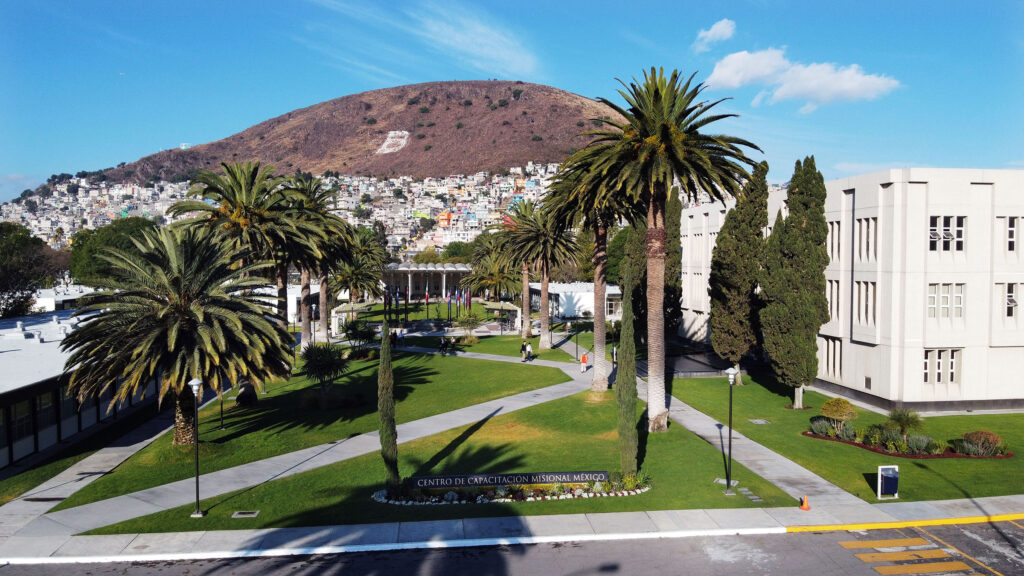
The Mexico MTC — or CCM Mexico — has become the Church’s second-largest center for missionaries trained and its largest in property size. The training center both receives from and sends out missionaries throughout the Western Hemisphere and across the globe. And the Mexico MTC is one of the key reasons why the Church has been able to close five smaller MTCs since early 2019.
They will not only receive training, they will develop a love for Mexico, its language and its people. They will be pioneers in their missions. They will be leaders throughout the entire world. So, that’s what we see in the future.
The cultural experience of training in Mexico with native speakers is a bonus for missionaries from the United States and Canada, said Lane Steinagel, who recently moved as director of international MTCs to area mission specialist within the Missionary Department.
“What better way to prepare them not only to learn the language,” he said, “but to go down and be among those people, be among the culture and be among the missionaries who are from the places or going to the places or have connection with the people that they’re going to meet on their mission and teach.”
Perla Velazquez is one who can claim a full range of campus experiences — a Benemérito student as a teenager, a young missionary training at the Mexico MTC and now a teaching supervisor there.
“I feel gratitude for being in this beautiful place. I know the Lord visits this place. I feel when the teachers teach, I feel the love of my Savior,” she said. “When I see the missionaries walking here, I remember this place was to prepare people for conversion — not just for the missionary training but before, in the school, in my training, and now as a supervisor. I feel this place is prepared in order to help others receive conversion.”
One major difference in Mexico is the MTC’s expansive property, the sprawling, enclosed 90 acres of the former Benemérito campus, including 50 multiroom casitas or small residences for elders, several apartment-sized dormitory buildings for sisters and plentifully spaced administrative and classroom buildings throughout. Compare that to the 35 acres of the Provo campus or the less-than-two acres of the towering MTC complex in São Paulo, Brazil.
“When our missionaries arrive there, many of course make the trip from the airport to the Mexico MTC, which is culture shock just to drive through and see Mexico City,” Elder Nielson said. “But when they arrive at the MTC and they’re welcomed by all these wonderful Mexican members, they feel like they’re home.”
The square footage “blows all of the other MTCs out of the water,” said Polo, highlighting the outdoor areas for study, teaching, practicing and role-playing among palm trees, flowering bushes, lush lawns and the squawking monk parakeets. “It’s a unique feeling that missionaries probably don’t feel confined — there’s open air, and the weather’s good most of the year.”
Getting to Mexico City from across Mexico as well as the United States and other nations isn’t much of a problem. The nation’s capital is served by plenty of nonstop flights, including from Salt Lake City.
“There are times of the year when we have lots of missionaries going down where almost every passenger on the plane is a missionary on their way to the Mexico MTC,” said Mills of the SLC-MEX route.
“One of the flight attendants who is on that flight every week told me the story once of a flight landing, and as they were taxiing toward the terminal, the missionaries began to sing ‘Called to Serve.’ ”
On a recent visit to the Mexico MTC, Mills observed the blend of training programs — North American missionaries learning Spanish interacting with native speakers from Mexico and other Latin American nations in their own training.
“A takeaway was this sense of connection between all these missionaries, wherever they were from,” he said. “There was just this feeling of connection, unity and the purpose they felt as missionaries.”
And it’s a feeling of the Spirit throughout, said Sister Rose A. Olson, companion to the MTC president. “When the missionaries first arrive, a lot of them are very overwhelmed, just with the change in environment,” she said. “But it’s a safe place, and if they get past those first two days, they’re going to enjoy the companionship of the other missionaries, they’re going to find that the teachers are wonderful, they’ll be able to feel the Spirit, they’ll learn to teach the gospel with the Spirit.”
Elder Enrique Cepeda, of Nuevo Casas Grandes, Mexico, echoes that expression: “We can feel the love of the Lord, and I love it,” he said.
Added his MTC companion, Elder Alex Sanchez of Tegucigalpa, Honduras. “Since the first day we arrived, we were told we would learn that we are cared for by Him, to have reverence and to stay within the limits of the rules,” he said. “And I have learned that as I do that while I am here, this has become a sacred place, just like the temple or my own home.”
Cates, who for three years witnessed the transformation from school to missionary training center, puts a grander perspective on the “an oasis in the desert” tag given to the site and carrying over from its Benemérito roots to its current Mexico MTC expansion to what the future holds in store at the 90-acre property.
“It’s an oasis among one of the largest cities in the world, and every day miracles are happening there and missionaries’ hearts are changing. Every day, there is something incredibly special happening, and whomever is there has a front-row seat to one of the most amazing miracles that we see on Planet Earth, which is the changing of the human heart.
“And in this case, it’s missionaries preparing to go out and change others’ hearts.”


Comments
Post a Comment